讲座主题:Electrocatalytic CO2 reduction to formic acid / formate: catalyst design, electrode engineering, and process concepts
主讲嘉宾:Elias Klemm,教授,德国斯图加特大学
主持人:王铁军教授
讲座时间:2026年09月18日(星期五)15:00-16:00
讲座地点:大学城工学四号馆204会议室
报告人简介:
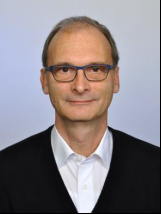
Elias Klemm教授,工学博士,现任德国斯图加特大学化工技术研究所终身讲席教授(W3),长期致力于技术化学与多相催化领域的研究。他于1995年在埃尔朗根-纽伦堡大学获得博士学位并完成教授资格论文,曾在德固赛公司(现赢创工业集团)担任项目工程师,2003年起先后任开姆尼茨工业大学教授和斯图加特大学教授。Klemm教授在德国工业催化领域具有重要影响,曾任德国研究联合会(DFG)过程工程与技术化学评审委员会委员、ProcessNet“反应工程”专业分部主席,并担任莱布尼茨催化研究所科学顾问委员。他荣获 DECHEMA 奖章、Jochen-Block 奖等多项荣誉,已指导约40名博士研究生。其研究聚焦电催化CO2转化、气体扩散电极、催化剂设计与反应工程,本次报告将系统介绍甲酸/甲酸盐电化学合成的最新进展。
报告摘要:
The use of CO2 as raw material can be a significant contribution to closing the carbon cycle, which is also called CCU (Carbon Capture and Utilization). One possible route is the conversion of CO2 with green hydrogen to certain hydrocarbons such as methanol or mixtures of hydrocarbons such as Fischer-Tropsch products. This route is pursued by so-called e-refineries which needs huge amounts of green hydrogen and captured CO2. CHEMampere, which is a Stuttgart Research Partnership, follows the concept of decentralized and distributed CO2-neutral production of chemicals and synthetic food, given that renewable electricity production is itself decentralized and that the largest renewable electricity power plants are capable of producing electricity only in the order of several Gigawatts (GW). Formic acid is a suitable intermediate for such a decentralized chemical production, because it is an intermediate for various future downstream processes such as fermentation, C-C coupling, transfer hydrogenations or carbonylations. Furthermore, it can be directly produced from CO2 and renewable electricity by electrocatalytic reduction. Sn, Bi, and In are the preferred active sites for this reaction which need to be present in a large amount and simultaneously supplied through a large three phase boundary (TPB) by electrons, CO2, and electrolyte. This results in a complex optimization problem of the catalyst (structure, morphology), the electrode (wetting, local concentrations), and reaction conditions (temperature, residence time) which will be exemplarily shown in this presentation. Last but not least, a CO2 neutral production of formic acid comprises the avoidance of Faradic and non-Faradic side products such as H2, CO and bicarbonate/carbonate, as well as the separation and recirculation of the electrolyte and CO2, that has not been converted. Finally, formic acid must meet the desired target concentration, e.g. 80 wt.%. The process energy required for this must not be of fossil origin, but should also come from renewable sources. Thus, an “all-electric” process based on renewable electricity is preferred and will be demonstrated.
欢迎广大师生参加!


 版权所有:成人导航-亚洲黄色网站导航
